
How to Start a Gym Wear Brand with Low MOQ: A Factory's Guide
Starting a gym wear brand with a low MOQ means testing a focused collection before committing to substantial inventory. Our factory’s minimum order quantity is strictly 10 pieces per style, achieved through in-stock garments enhanced with custom branding rather than new garment development from scratch.
A common misconception among startup founders is that launch MOQ requires ordering 300 to 500 units per colorway. That path ties up crucial capital before product-market fit is proven. This guide explains how to select styles, approve construction, calculate landed costs, and prepare your first order without confusing private-label customization with fully bespoke manufacturing.

1. How Can You Launch a Gym Wear Brand with a Low MOQ?
You can launch with a low minimum order quantity by selecting existing, production-proven in-stock styles and customizing their branding instead of commissioning new patterns, yarn blends, and custom lab-dip colors from zero. Our factory maintains a strict MOQ of 10 pieces per style through this approach, providing custom 3D high-density silicone heat transfer logos, custom woven neck labels, and branded frosted zipper packaging.
The distinction matters: you are choosing an existing, tested garment silhouette as your technical product base, then applying your custom brand presentation. Do not assume that altering a waistband height, switching fabric blends, or modifying inseam lengths is included within the same low-MOQ arrangement; structural modifications require tech packs, pattern digitizing, grading, and higher fabric yardage minimums.
Before selecting products, request written confirmation of:
- Style identification: The exact factory code, technical garment description, and currently available fabric colors.
- Size allocation: Which sizes (XS through XL) are ready and how your 10 pieces can be distributed across sizes.
- Customization scope: Logo dimensions, neck label attachment, and frosted bag artwork specifications.
- Stock reservation: The duration selected garments are held for your batch while branding artwork is finalized.
2. Build a First Collection Around One Training Use Case
Choose a clear customer and training context before browsing wholesale gym clothing catalogs. A powerlifting or strength-training collection demands a completely different technical brief than apparel intended primarily for reformer Pilates, hot yoga, or daily athleisure wear. Write down the movement patterns, compression demands, coverage expectations, and fit preferences your initial items must solve.
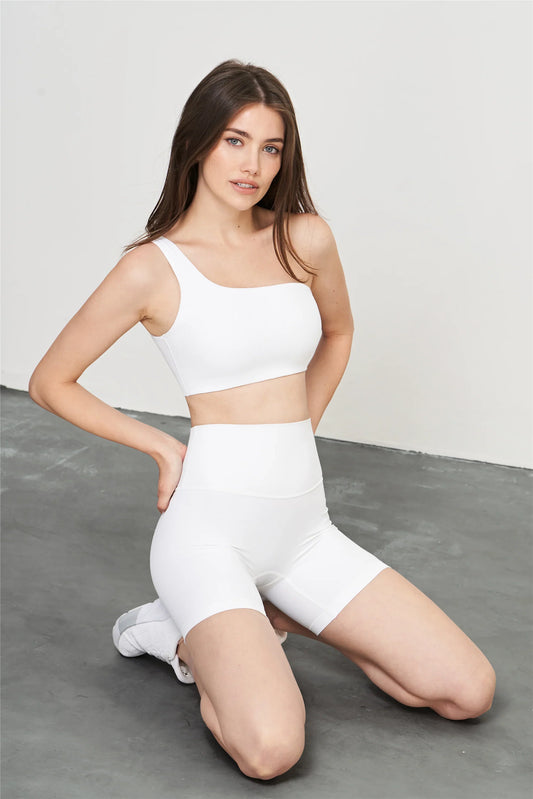
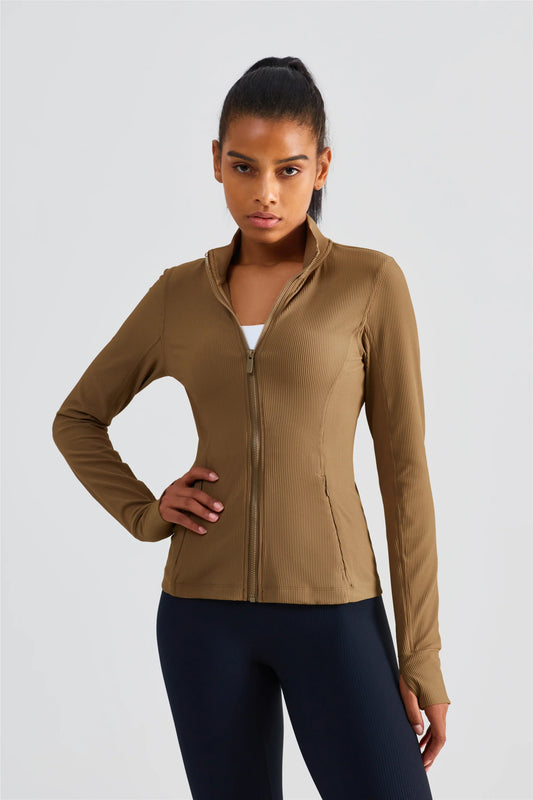
Keep your opening range narrow enough to evaluate thoroughly. For example, consider starting with one core high-waist legging and one coordinating sports bra or cropped workout jacket rather than spreading capital across five unrelated silhouettes.
Create a product specification sheet for each shortlisted style. Record fiber composition (such as 75% Nylon / 25% Spandex), fabric weight (GSM), flat-lay measurements, waistband structure, seam type (such as 4-needle 6-thread flatlock), available size ranges, and wash care instructions.
3. Approve Garment Construction Before Adding Branding
Always request physical samples of the exact styles you intend to buy. Evaluate garment fit, compression, and range of motion before spending time on packaging artwork; an exceptional logo print cannot save an uncomfortable or ill-fitting legging.
Repeatable Factory Sample Checklist:
- Squat-Proof Opacity: Inspect the leggings during full-depth squats under bright, direct indoor lighting using the intended base size. Fabric stretching across glutes must not sheer out.
- Waistband Integrity: Test for waistband rollover, slippage during sprints or burpees, and excessive seam pressure at the top edge.
- Seam Comfort: Examine 4-needle 6-thread flatlock stitching across friction points (inner thighs, underarms). Check for loose loop ends or scratchy thread joins.
- Elastic Recovery: Observe knee, elbow, and seat recovery after several hours of active wear. Quality 260–280 GSM interlock knit must snap back without bagging.
- Wash Performance: Run samples through machine wash and tumble dry according to label instructions. Measure shrinkage and inspect trims afterward.
- Camel-Toe-Free Gusset: If your brand promises no front-rise seam or diamond gusset construction, inspect the gusset shape, seam intersections, and crotch curve directly on live models.
4. Turn Stock Garments into a Consistent Branded Product
For the 10-piece MOQ private-label model, custom gym apparel means elevating factory-proven stock garments with premium trims and professional packaging. High-end branding transforms an unbranded blank into a retail-ready, cohesive brand experience.
Define Logo Placement and Artwork Specs
Provide vector artwork (AI or PDF format) and specify 3D silicone heat transfer printing. Unlike traditional water-based silk screening, matte or glossy 3D silicone maintains elasticity, does not crack when the garment stretches, and provides an elevated tactile finish. State exact logo width (e.g., 4.5 cm), Pantone color code, and placement measured from a fixed seam (e.g., center back waistband 2 cm below top seam, or left hip 5 cm below waistline).
Custom Woven Labels & Frosted Zipper Bags
For sports bras and tops, specify woven damask neck labels or heat-transfer size/care labels with soft-edge folding. For packaging, custom frosted EVA/PE zipper bags with branded monochrome printing protect garments during transit, keep dust off in fulfillment centers, and deliver a premium unboxing experience for customers.
5. Verify Social Audit and Fabric Documentation Separately
European and UK customers increasingly demand transparent, ethical supply chains. When vetting manufacturing partners, keep social compliance audits and raw material certifications distinct:
- amfori BSCI Grade A Compliance: BSCI evaluates working hours, fair remuneration, workplace safety, and anti-child-labor practices. Our manufacturing facility operates under an amfori BSCI Grade A audit, ensuring your brand stands on verified ethical production standards.
- OEKO-TEX STANDARD 100 Certified Fabrics: This certification confirms yarn, dyes, and finishes have been rigorously tested against hundreds of harmful chemicals. It guarantees skin safety and non-toxic dyes, but does not measure fit or stretch recovery—which is why your physical sample inspection remains essential.
6. What Should Your First-Order Budget Include? (Cost Breakdown)
Always calculate your total landed cost per unit rather than looking solely at bare garment prices. An itemized quote for your initial 10-piece batch should cleanly separate manufacturing, branding setup, and door-to-door logistics:
| Cost Category | Factory Line Item Details | What to Confirm |
|---|---|---|
| In-Stock Garments | Tested blanks (leggings, sports bras, tops, jackets) | Style code, unit price, size breakdown, available colors |
| 3D Silicone Logo | Steel mold setup + high-density silicone heat transfer | Mold charge, per-garment heat press application fee |
| Labels & Packaging | Custom woven neck labels & printed frosted zip bags | Label minimums, factory inventory storage for reorders |
| Pre-Production Sample | Branded physical sample for fit, wash, and stretch tests | Sample lead time strictly 7–10 days; express air transit |
| Order Delivery (DDP) | Worldwide air express courier (FedEx/DHL/UPS) | Door-to-door delivery with all import duties and VAT prepaid |
7. Confirm Delivery Terms and Release the Order Carefully
Our factory provides worldwide DDP (Delivered Duty Paid) air express shipping to the UK, European Union, United States, and international destinations. Under official ICC DDP incoterms, the seller assumes responsibility for export clearance, international freight, import customs clearance, and prepayment of all destination duties and taxes. Goods arrive directly at your commercial address or home studio ready for immediate retail fulfillment, eliminating unexpected brokerage fees or customs delays.
Keep customization schedules separate from shipping transit times. For in-stock private-label production, branding application and quality control typically require 7 to 10 days, followed by 5 to 7 days for air express delivery. Never announce a rigid public launch date before receiving tracking and final pre-dispatch photos.
8. Use the First Order to Make a Better Second Order
A 10-piece initial order is not merely stock to sell; it is live market intelligence. By putting authentic, branded activewear into the hands of real athletes, gym trainers, and early adopters, you gather genuine feedback:
- Track sizing distribution: Did Small sell out before Medium? Adjust your next size ratio accordingly.
- Collect fit observations: Do customers praise the compression or request higher waistband support?
- Protect cash flow: Reorder winning styles quickly (7–10 day turnaround) without capital trapped in slow-moving inventory.
Ready to Start Your Brand with Low MOQ?
Whether you want to inspect our current activewear catalog, request fabric swatches, or test a custom 3D silicone logo sample on in-stock leggings, our factory team is ready to assist.
Direct Production Line Contact:
• Contact: William (Founder & Production Director)
• WhatsApp: +86 151 4025 2177
• Email: wutongactive@gmail.com
• Standard Turnaround: 7–10 days sampling / custom branding | Worldwide DDP Air Express
WutongActive — China Direct Activewear Factory & Private Label Specialist (amfori BSCI Grade A | OEKO-TEX Standard 100)
Previous
2027 Yoga Wear Trends: What Real Brands Are Actually Producing (Fabric GSM, Patterns & Low MOQ)
Next
Sourcing Brushed Wide-Leg Yoga Sets: A Factory Guide to Fabric GSM, Contrast Construction & 10-Set MOQ