2027 Yoga Wear Trends: What Real Brands Are Actually Producing (Fabric GSM, Patterns & Low MOQ)
Every year around this time, activewear founders start asking us what they should actually be developing for the next cycle. Planning for 2027 is already starting, and after watching dozens of small gym wear labels launch over the past few years, a few things have become very clear.
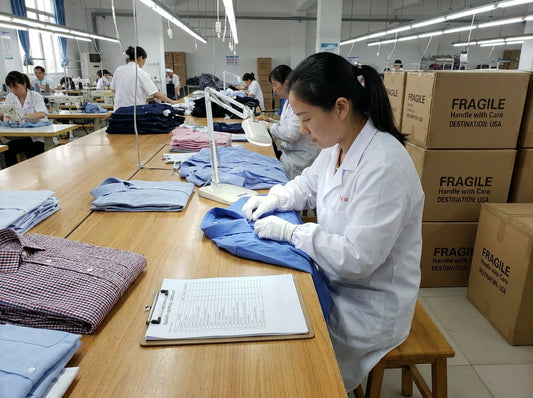
A lot of advice on the internet comes from marketers who have never stepped foot in a sewing workshop. They talk about vague concepts like "athleisure lifestyle" without mentioning stitch density, fabric weight, or what actually causes customers to return a pair of leggings.
Here is an honest breakdown of what we are cutting, sewing, and printing on our lines right now, what works, and what you should avoid if you are building an activewear brand for 2027.

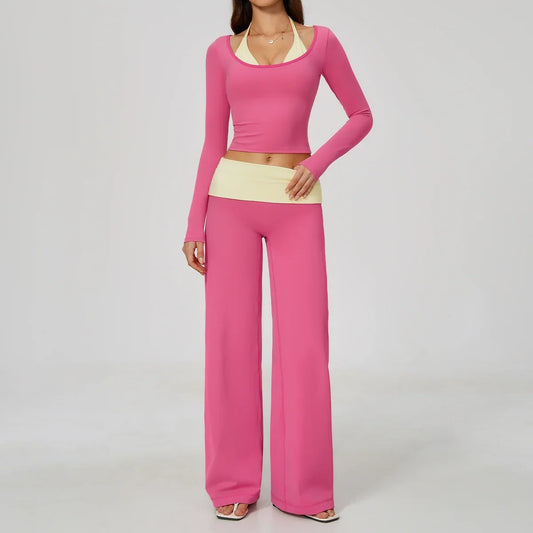
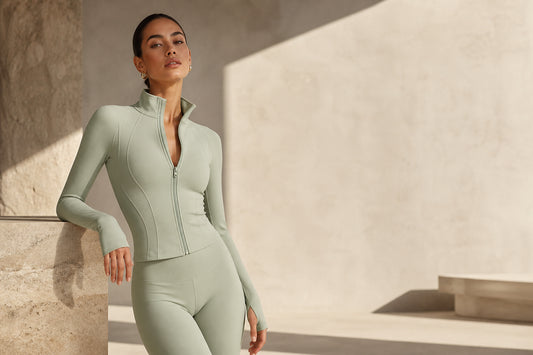
Workshop sample: 280 GSM crossover V-waist flared pants with front ankle slits and high-support crop top.
1. First, be realistic about production timelines (7–10 days)
If a factory tells you they can make a custom activewear prototype from scratch in 3 days, be careful. That usually means they are rushing through pattern adjustments, skipping shrinkage tests, or simply grabbing an off-the-shelf blank and slapping a sticker on it.
Proper sample making takes 7 to 10 days. You need time for CAD grading, precision fabric resting so the spandex does not twist after cutting, setting up the custom 3D silicone logo mold, pressing, flatlocking, and doing a full wash and stretch check. Rushing that process just means you end up with bad samples and wasted shipping fees.
2. Fabric weight: why 260–280 GSM is the sweet spot
We often get inquiries asking for leggings made from 200 or 220 GSM fabric because someone wants them to feel "completely weightless."
We almost always advise against it for gym leggings. At 220 GSM, once a customer bends over in bright gym lighting, the fabric stretches thin and becomes see-through. 220 GSM is fine for lightweight summer sports bras, lounge tops, or hot yoga pieces, but it does not work for squats or deadlifts.
For performance leggings heading into 2027, the standard that works best is 260 to 280 GSM nylon-spandex interlock (typically 75% nylon, 25% spandex). At this weight:
- It is 100% squat-proof under full stretch.
- It gives enough gentle compression to smooth out lines without digging in.
- It keeps its recovery and does not bag out at the knees after a long workout.
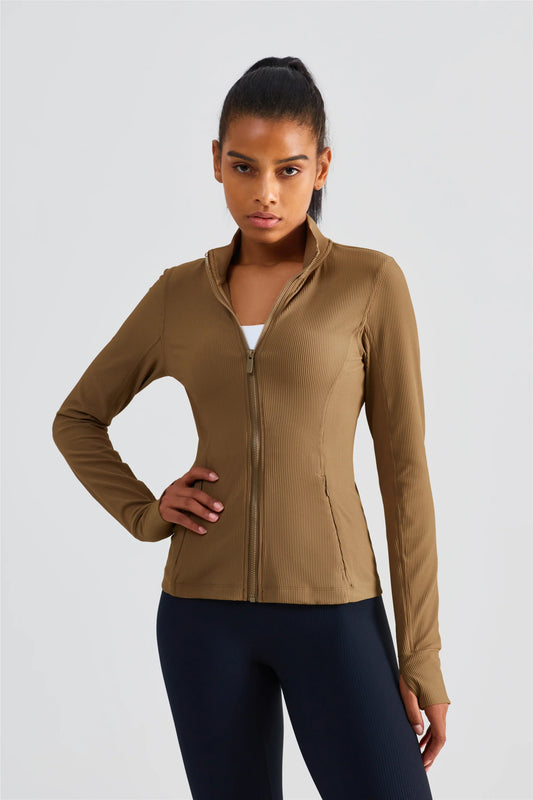
If you are planning winter outdoor gear or structured zip-up jackets, you can push up to 300–320 GSM, but for everyday activewear, 260–280 GSM is where the vast majority of winning products sit.
3. The three pattern fixes that prevent returns
Customer returns are the quiet killer for small activewear brands. Looking through client feedback, three specific pattern adjustments consistently make the biggest difference:
A. No front center seam: Removing the front rise seam and replacing it with a clean diamond gusset eliminates camel-toe issues. It sounds simple, but it is one of the most requested features from female buyers right now.
B. V-cut waistband: Standard horizontal waistbands tend to fold and roll down the second you hinge at the hips. A curved, crossover V-waistband sits naturally along the waistline and stays put during movement.
C. 4-needle 6-thread flatlock stitching: Standard overlock seams leave a raised ridge on the inside of the leg that rubs against the skin during repetitive motion. Flatlock seams lie completely flat on both sides, which prevents chafing.
4. Why we stopped doing regular screen print on activewear
Activewear fabric stretches up to 400%. Traditional screen print ink does not. If you print a logo with standard ink, it will micro-crack the very first time someone pulls the leggings up over their hips.
For all our custom private label orders, we use pneumatic high-density 3D silicone heat transfers. Silicone has the same elastic memory as the fabric itself, so when the garment stretches, the logo stretches with it, then snaps right back. Plus, the raised matte texture looks and feels significantly more premium. Pressed under 160°C with regulated pressure, it holds up through 50+ wash cycles without peeling.
5. How to launch in 2027 without drowning in inventory
The traditional apparel model—where a factory demands 300 to 500 pieces per style—just does not work for independent founders. If you order 300 pieces in 3 colors, you are suddenly sitting on 900 pairs of leggings before you even know if your audience likes the fit or color.
That is why we built our setup around 10 pieces minimum order quantity (MOQ):
- You can pick our in-stock 260–280 GSM blank styles in core colors.
- Mix sizes (for example: 2 Small, 4 Medium, 3 Large, 1 XL) within those 10 pieces.
- We apply your custom 3D silicone logo, woven neck label, and pack them in frosted zipper bags.
- Sampling takes 7 to 10 days, so you can test the physical product before committing to bigger runs.
This lets you test the market, shoot your content, and get real feedback from paying customers with minimal upfront financial risk.
6. Certifications and shipping: what to look out for
If you sell into the UK or Europe, make sure your manufacturer uses OEKO-TEX Standard 100 certified fabrics and dyes so you do not run into chemical compliance issues. Our facility also holds an amfori BSCI Grade A social audit, which means fair wages and safe working conditions you can stand behind when talking to customers.
For shipping, we ship DDP (Delivered Duty Paid) air express directly to your door in 5 to 7 days, with customs and import taxes handled upfront so there are no surprise courier bills on arrival.
Have questions about an upcoming project or need advice on fabrics?
You can check our in-stock 10-piece catalog here, or message our workshop team directly on WhatsApp at +86 151 4205 2177 (or email wutongactive@gmail.com). Send over your logo or ideas, and we can look over your designs together.
Previous
How Much Does a T-Shirt Weigh? Activewear Fabric Weight (GSM) & Sourcing Guide
Next
How to Start a Gym Wear Brand with Low MOQ: A Factory's Guide